Don't Feed The Monkey Mind
Book Review: Don't Feed The Monkey Mind
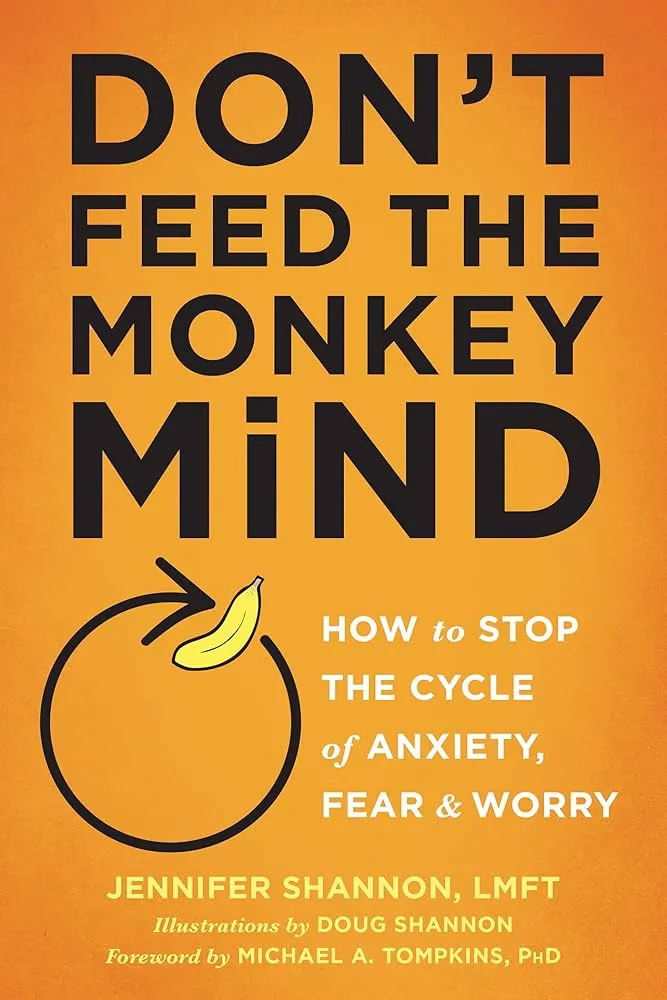
Genre: Non-Fiction / Psychology
Read Date: November 2025
Score: 5/5 ⭐
Rank: Highly Recommended
Summary:
Jennifer Shannon walks readers through tried and true cognitive behavioral therapy (CBT) and mindfulness techniques to overcome anxiety and find a new sense of calm.
Review:
Anyone who has dealt with crippling anxiety will know that it can feel nearly impossible to shut down the inner chatter that dominates your mind during an episode. I've certainly experienced this many times and have been quite discouraged by how difficult it is to overcome.
There's not much worse than feeling worried about something (or multiple things) and having your brain constantly bring it to the forefront of your thoughts. For me, it tends to begin in the middle of the night. I'll wake up and my mind will begin racing, making it feel nearly impossible to go back to sleep. Sometimes, I'll lay awake for hours and finally just give in and get up. \
But it doesn't stop there. The thoughts tend to continue to swirl around my head, making my chest feel like it's being constricted by invisible bands and my heart race. During the worst episodes, this will continue for days and I'll end up feeling like I'm not actually present in life, but stuck in my own head with no way to escape.
It's awful.
Thankfully, a friend of mine recommended this book to me last fall and I picked it up right away. (Thanks, Eric!)
The author compares the swirling thoughts I described above as the chatter of our monkey mind, or the primal part of us that is always on the look out for danger. The monkey's job is to keep us safe and when it senses danger, to yell until we flee or hide. This is often talked about as being in fight or flight mode and is directly tied to our nervous system.
As the book unfolds, it walks you through several exercises to calm the monkey mind and stop the cycle of anxiety. One of the more impactful topics for me was understanding that giving into your fear or anxiety by doing things like researching symptoms or looking up headlines can actually cause the cycle to start over (A.K.A. feeding the monkey) and make your exit towards calm even harder to achieve. She instead suggests that you thank the monkey mind for alerting you of the danger and to then move on, starving the monkey and making the brain realize that the perceived danger was not real.
In most cases our past trauma and/or experiences have led us to be on high alert, looking for danger at every turn. This is true even when we are in a safe environment. Our brain is just trying to protect us and prevent us from experiencing pain again. We can also remind ourselves that we are safe and not in danger at all, choosing to embrace the experience our mind was warning us against (when appropriate - if you're actually in danger, then listen to your body).
The author also walks readers through some mindfulness techniques like grounding and connecting to the breath. These are scientifically proven methods to lower heart rate and cortisol, bringing a sense of relaxation and calm. Certain breathing techniques can also engage our vagus nerve and trigger the "rest and digest" pathway, which truly transitions you out of fight or flight mode.
There's a lot more that could be said about the book, but I enjoyed learning about cognitive behavioral therapy from a practical standpoint. She writes from a place of compassion and empathy, because she has experienced anxiety herself (like most of us have). The book is easy to read and has so many techniques to practice that I'd imagine anyone can find one or two that truly help them.
In my own experience, applying the principles taught within the book have allowed me to reduce my anxiety symptoms from multiple times a week to maybe once or twice a month. This combined with regular therapy, yoga, meditation, walks in nature, and prayer have been huge for me.
Just Read It 🧠 If you struggle at all with anxiety, even a little bit, just read this one. It's so useful, plus it's a quick and easy read.